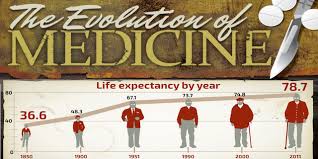
The Evolution of Medicine: A Journey Through Time and Innovation
Medicine has been an essential part of human civilization for thousands of years, with its practices evolving from primitive treatments to the sophisticated medical advancements we rely on today. The journey of medicine is a testament to human ingenuity, perseverance, and a deep-seated desire to improve the health and well-being of individuals. From ancient herbal remedies to modern genetic engineering, medicine has continuously advanced, transforming the way we approach disease, health, and healing.
The earliest forms of medicine were often rooted in spirituality, superstition, and trial and error. Ancient civilizations, such as the Egyptians, Greeks, and Chinese, relied on natural resources like plants, minerals, and animal products to treat ailments. The Egyptians were pioneers in surgical practices, and they created early forms of medical texts that detailed various ailments and treatments. The Greeks, led by Hippocrates, are credited with laying the foundation for modern medicine through their emphasis on observation, diagnosis, and the understanding of disease as a natural process rather than a divine punishment.
One of the most significant milestones in medical history occurred during the Islamic Golden Age (8th to 14th century), when scholars like Avicenna (Ibn Sina) made groundbreaking contributions to medical knowledge. Avicenna’s “The Canon of Medicine” became the standard medical text in both the Islamic world and Europe for centuries. During this period, the foundations of pharmacology, surgery, and anatomy were further developed, and medical practices were increasingly based on empirical evidence.
As the Renaissance emerged, so did a renewed interest in scientific inquiry, which led to further advancements in the understanding of the human body. In the 16th and 17th centuries, scientists such as Andreas Vesalius and William Harvey revolutionized anatomy and physiology, while advances in microscopy allowed for the discovery of microorganisms, laying the groundwork for the field of microbiology.

The 19th century was a period of rapid progress in medicine, with discoveries that would shape the future of healthcare. The development of germ theory by Louis Pasteur and Robert Koch revolutionized the understanding of infectious diseases. The advent of anesthesia and antiseptic techniques made surgery safer and more effective. The discovery of vaccines and the development of antibiotics, including penicillin by Alexander Fleming, marked major milestones in the fight against diseases that had plagued humanity for centuries.
In the 20th and 21st centuries, medicine entered a new era characterized by technological innovation. Medical imaging techniques such as X-rays, CT scans, and MRIs allowed for non-invasive diagnosis, while advancements in genomics paved the way for personalized medicine. The discovery of the structure of DNA by James Watson and Francis Crick in 1953 unlocked the mysteries of genetics, enabling targeted therapies and the potential for gene editing.
Modern medicine continues to evolve at an unprecedented rate. From robotic surgeries to artificial intelligence in diagnostics, the future of healthcare looks promising. The ongoing research into stem cells, gene therapy, and nanotechnology holds the potential to revolutionize treatment options for a wide range of diseases. Moreover, the global response to pandemics, such as the COVID-19 crisis, has highlighted the importance of collaboration and innovation in addressing public health challenges.
In conclusion, medicine has come a long way from its ancient origins, with each era contributing to the ever-expanding body of knowledge and techniques used to treat and prevent disease. As technology continues to advance and our understanding of the human body deepens, the future of medicine holds endless possibilities for improving health outcomes worldwide. The pursuit of knowledge and the commitment to alleviating suffering remain at the core of medical practice, ensuring that medicine will continue to evolve for generations to come.